In December 2025, at the Streamer Awards, Kai Cenat announced that he was stepping into fashion. What followed was far from a typical celebrity clothing launch.
The American streamer and entrepreneur stepped away from the platform that had made him one of the biggest names on Twitch and spent the next nine months immersing himself in fashion. He travelled to Italy, studied textiles and garment construction, learned to sew, explored denim manufacturing and leather construction, and began documenting the process that would eventually become VIVET.
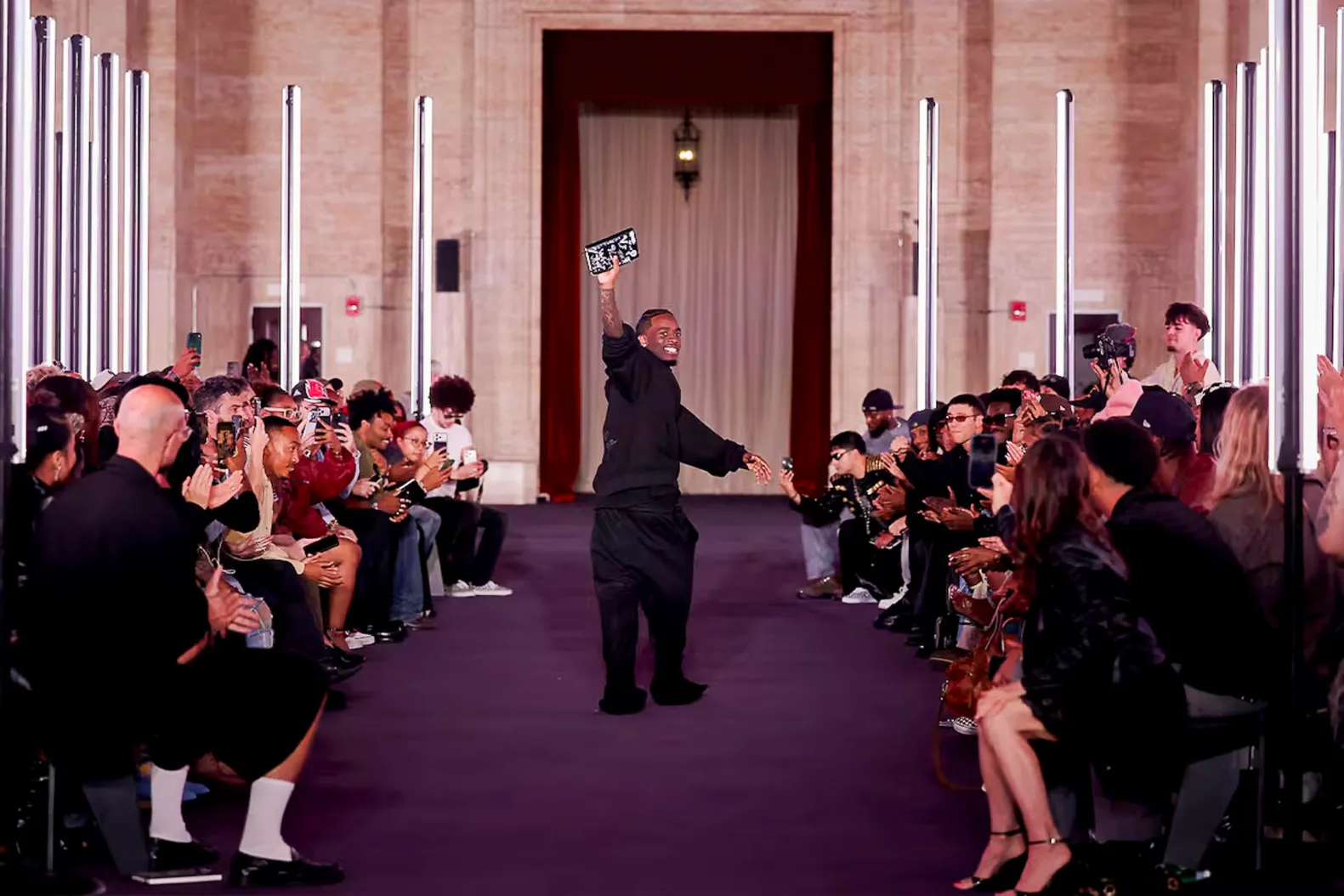
On September 12, 2026, that process reached its biggest moment yet as VIVET officially made its runway debut at Cipriani in Lower Manhattan during New York Fashion Week, presenting its inaugural Spring/Summer 2027 collection.
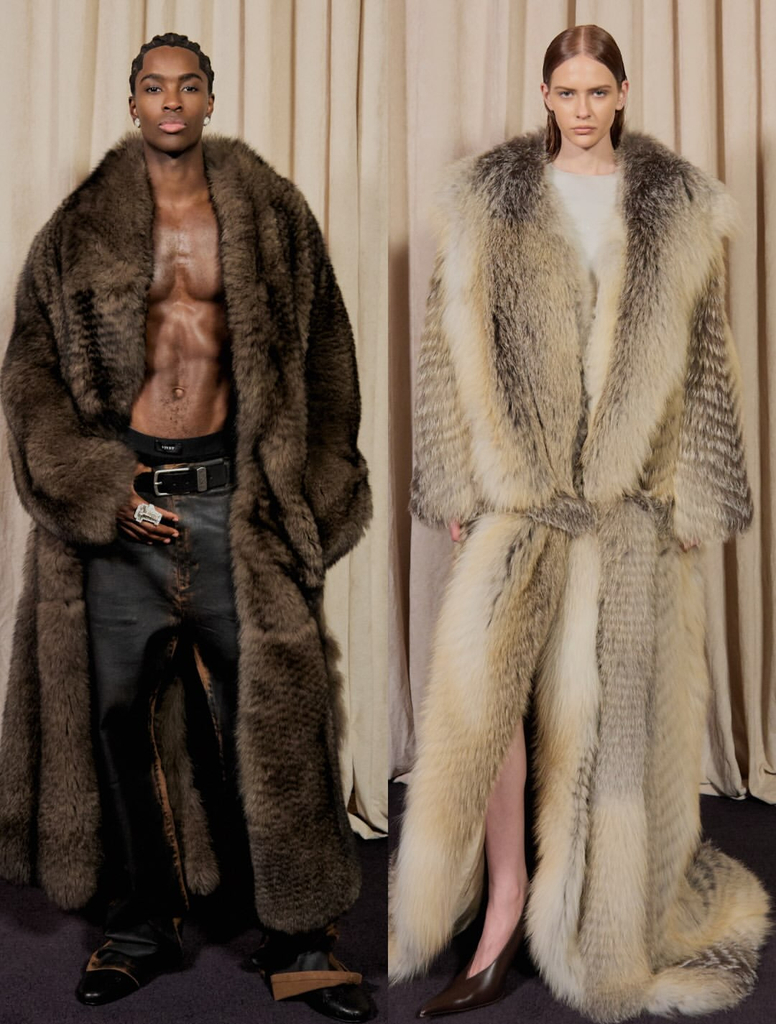
The show brought together two worlds that have increasingly become part of Cenat’s identity. In attendance were Ms. Lauryn Hill, Law Roach, DDG, Karrahbooo, PlaqueBoyMax and members of the AMP crew, while the runway featured a mix of established fashion figures and creators including Alton Mason, Duke Dennis, Raysian Boy, Marlon, Giovanna Ramos, BruceDropEmOff and Siebe. The presentation was also livestreamed globally, allowing the same audience that had followed Cenat’s journey into fashion to watch the collection come to life.
The time Cenat spent away from streaming is an important part of the VIVET story.
In October 2025, he had surpassed one million Twitch subscribers. His Mafiathon 3 broadcast had featured figures including Twitch CEO Dan Clancy and LeBron James. Then he stepped away.
In January 2026, Cenat uploaded a YouTube video titled “I Quit.” But what he described quitting was not streaming. It was the hesitation and overthinking that had kept him from pursuing ideas he wanted to explore.
“I quit overthinking. I quit staying in my head about the goals I have and whether they’re going to work or not. I want to push limits to see what I can truly create in life.”
He put that mentality into practice with VIVET.
Cenat travelled to Italy to study textile production and document the brand’s denim manufacturing process. He learned to sew and spent time studying the construction of garments, leather and other materials. During Paris Fashion Week Men’s in January 2026, he attended the Louis Vuitton and 424 runway shows with a VIVET journal in hand, while also connecting with Pharrell and 424 founder Guillermo Andrade.
Law Roach became an important mentor throughout the process, helping Cenat navigate an industry that was new territory for him.
Rather than presenting himself as an established fashion authority, Cenat approached the process as a student. He documented the journey through vlogs, journal pages, leather swatches, handwritten notes, Polaroids and footage from sewing shops and factories.
That process eventually became part of VIVET itself, with select Collection 1 orders including a printed version of the journal.
The VIVET Debut
VIVET, derived from the Latin phrase meaning “he, she, or it will live forever,” represents Cenat’s attempt to build something that extends beyond his identity as a streamer.
The debut collection consists of 20 pieces spanning menswear and womenswear, including tops, knitwear, bottoms, footwear, accessories and luxury leather goods.
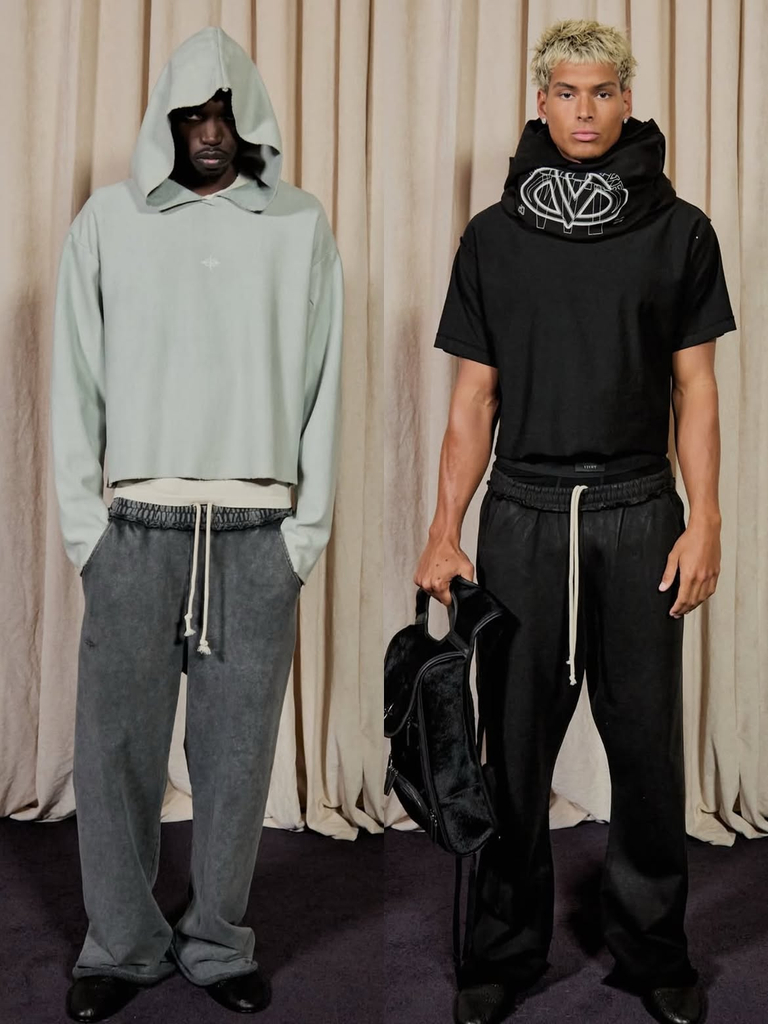
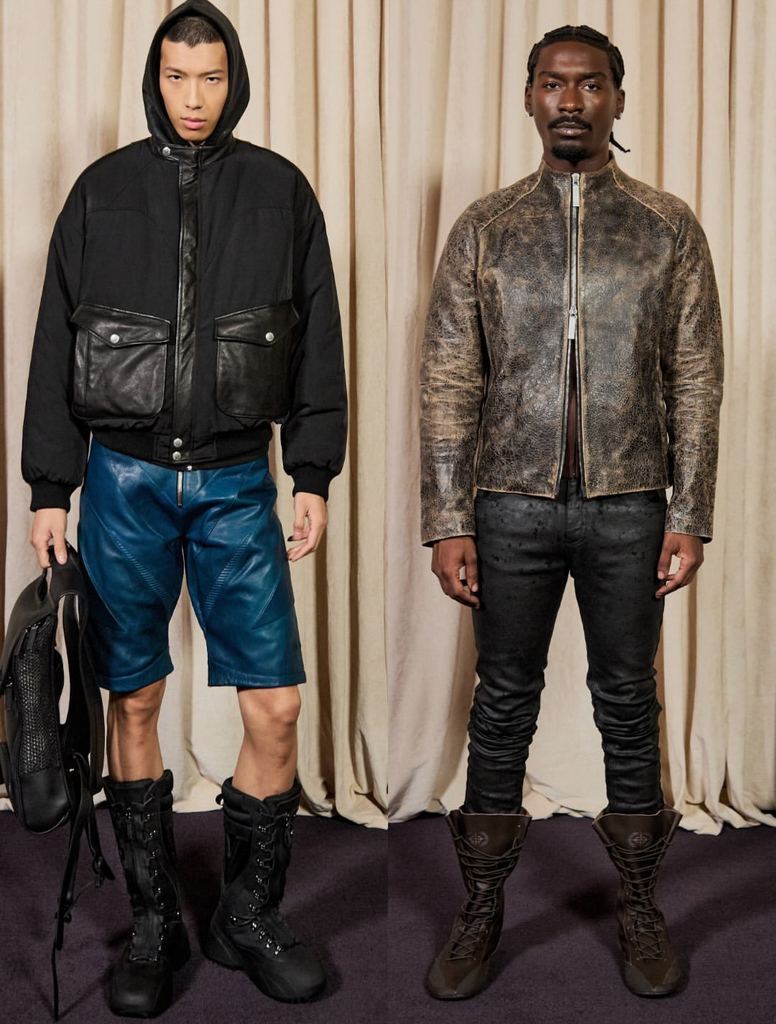
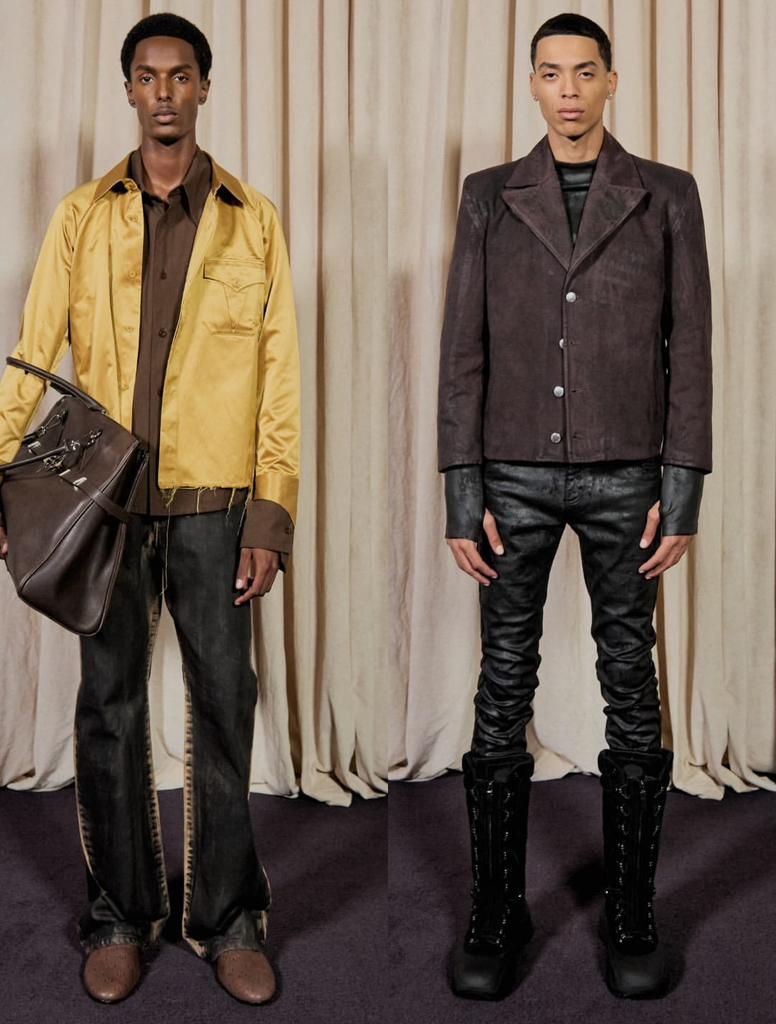
The collection moves between streetwear and more structured luxury, built around dark tones, graphic elements and the brand’s recurring ornate cross-like logo. Leather plays a central role throughout, appearing in pieces such as a cargo jacket, slim-fit leather pants and a leather button-down.
The runway itself was divided into three acts, showing the progression of the collection.
Act One introduced the collection through more unrefined silhouettes, including the hand-sewn Beginner Hoodie. Act Two pushed further into subcultural references with heavy leather outerwear, razor-thin denim and structured boots. By Act Three, the collection reached its most developed form, introducing architectural suiting, fluid silk and fully closed leather coats.
The collection also incorporates four primary fabrications: cotton canvas, denim, neoprene and hand-finished leather.
Among the standout accessories are the Cenova bag and the Streamer bag, a luxury leather piece inspired by the world of digital broadcasting that Cenat comes from.
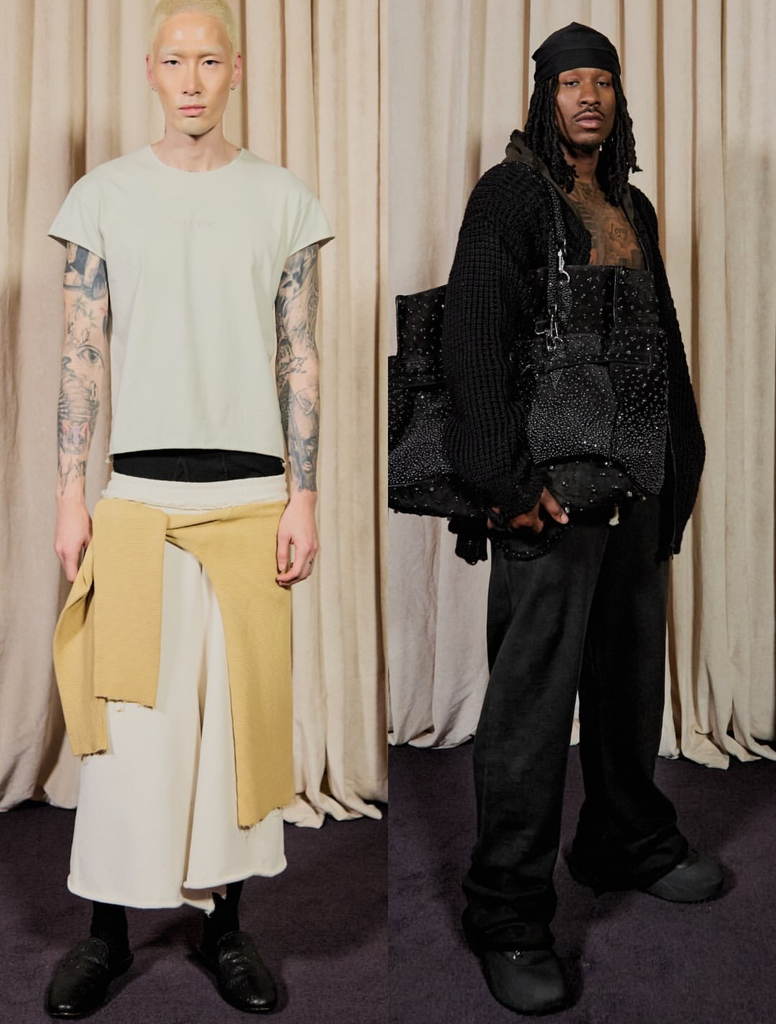
Some of the collection’s details also reference Cenat’s Haitian heritage and carnival traditions. The scuba moto shirt, varnished jeans and cargo work jacket incorporate these influences through construction details, exposed seams, gusseted elbows and hand-applied patinated waxes.
Prices range from $20 to $1,195, with the collection available through a see-now-buy-now model.
Two Worlds Meet on the Runway
Perhaps the most interesting part of VIVET’s debut was the people walking it.
Alton Mason, one of fashion’s most recognizable runway models, appeared alongside Duke Dennis, Raysian Boy, Marlon, Giovanna Ramos, BruceDropEmOff and Siebe.
The casting reflected the space Cenat has occupied throughout the creation of VIVET. One side represented the fashion industry he spent months studying and learning from. The other represented the online community that had followed him long before he entered fashion.
That same connection extended to the audience. Rather than keeping the debut entirely behind an invitation-only presentation, VIVET was livestreamed globally, bringing the collection directly to the community that had watched Cenat document its creation.
With Law Roach in the audience and Ms. Lauryn Hill among the front-row guests, the debut carried an attention that extended well beyond the traditional fashion crowd.
More Than a Celebrity Brand
Cenat has been clear that VIVET was not intended to be a simple celebrity name attached to clothing.
“This is not me sticking my name on a brand and money-grabbing,” he said in his “I Quit” video.
The nine months spent learning before the first collection gave that statement some context. Cenat did not simply announce a brand and immediately release merchandise. He documented himself learning about the industry, travelling to manufacturing facilities, studying construction and surrounding himself with people who could challenge and teach him.
VIVET is also entirely owned by Cenat through VIVET APPAREL LLC, without outside investors or corporate backing.
After returning to streaming in July, Cenat continued developing VIVET alongside his career as a creator. Now, with its first runway show complete, the brand has moved from an idea documented in notebooks and factory floors to a collection presented on one of fashion’s biggest stages.
It is still early in VIVET’s story, and its long-term place within fashion remains to be established. But its debut at New York Fashion Week makes one thing clear: Kai Cenat is no longer simply talking about getting into fashion.
He has officially entered it.
Cover Photo: Thomas Concordia/Getty Images for VIVET